Vehicle Number Search Guide – RC Details, Owner Info, Insurance Status & RTO Record Check
Searching a vehicle number online can help you verify important registration information before buying, selling, renewing, or managing a car, bike, scooter, or commercial vehicle. A vehicle number search can provide useful details connected with the Registration Certificate (RC), insurance status, registering RTO, vehicle class, fuel type, registration date, and limited owner-related information.
For second-hand vehicle buyers, checking these details can be especially important. A car may look perfect during a physical inspection, but its registration, insurance, finance, or ownership records may require additional verification. Checking the registration number can help you compare what the seller says with the information available in authorized vehicle records.
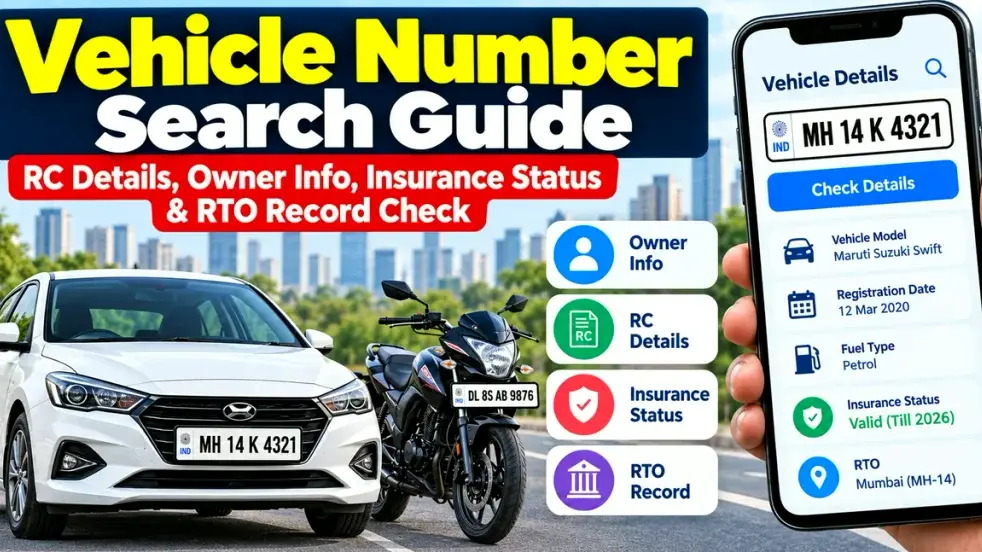
This guide explains how to search vehicle details by registration number, what RC information may be available, how owner and insurance details work, and what you should verify before completing a used-vehicle transaction.
What Is a Vehicle Number Search?
A vehicle number search means using the registration number shown on a vehicle’s number plate or RC to check available registration-related information.
Every legally registered vehicle receives a unique registration number from the concerned transport authority. The number normally contains codes representing the state or Union Territory, registering authority, series, and individual vehicle number.
The registration number acts as an important reference for many transport-related records. However, it does not mean that every piece of information about the vehicle or its owner will be publicly available.
Privacy restrictions can limit access to personal information, while certain records may require additional verification.
What Information Can You Check Using a Vehicle Number?
The exact information shown can vary according to the vehicle record, state, service, and privacy rules. However, a vehicle search can potentially provide several important details.
| Vehicle Record | Details You May Be Able to Check |
|---|---|
| Registration Number | Official registered vehicle number |
| RC Status | Active, expired, suspended or other status |
| Registration Date | Original registration date |
| Vehicle Class | Car, bike, scooter, transport vehicle, etc. |
| Fuel Type | Petrol, diesel, CNG, electric or other |
| Manufacturer | Vehicle maker information |
| Vehicle Model | Model information where available |
| Owner Information | Limited or masked owner-related details |
| Insurance Status | Policy or expiry information where available |
| RTO Record | Registering authority information |
| Hypothecation | Finance-related details where recorded |
| Fitness Information | Applicable mainly to certain vehicle categories |
| Vehicle Age | Estimated from registration date |
The information shown online should always be compared with original vehicle documents when making a purchase or financial decision.
How to Search Vehicle Details by Registration Number
To perform a vehicle number search online, keep the complete registration number ready. Enter the number exactly as it appears on the number plate or RC.
An authorized vehicle information service may ask for verification such as an account login, CAPTCHA, or OTP before displaying the available record.
After successful verification, you may be able to see basic registration information, RC status, vehicle category, fuel type, registration date, and other available details.
If any important information appears different from the documents presented by the seller, do not ignore the mismatch. Recheck the number and confirm the record through the relevant transport authority before proceeding.
How to Check RC Details
The Registration Certificate, commonly called the RC, confirms that the vehicle is registered with the appropriate transport authority.
An RC record contains several important pieces of information associated with the vehicle. Checking RC details can help confirm whether the number plate and registration document belong to the same vehicle.
RC-related information may include the registration date, vehicle class, fuel type, manufacturer, registration validity, and other technical details.
In certain cases, finance or hypothecation information may also be connected with the RC.
For a used vehicle, comparing the RC record with the actual vehicle is one of the most important steps before payment.
Why RC Status Matters
The RC status can help you understand whether the vehicle’s registration record is currently active or whether additional action may be required.
Registration requirements can depend on vehicle category, age, state, and applicable transport rules.
If you are buying an older vehicle, check the registration validity carefully. An attractive purchase price may not be a good deal if significant registration, fitness, or documentation work is still pending.
RC verification is also useful if a seller claims that an ownership transfer, address update, or other registration change has already been completed.
Can You Check Owner Information by Vehicle Number?
One of the most searched queries is vehicle owner information by registration number.
Vehicle registration databases contain ownership records, but public access to personal information may be limited. Depending on the service and applicable privacy rules, the owner’s information may be partially displayed, masked, or unavailable.
A public search should not be expected to reveal sensitive personal details such as a complete home address, phone number, or other private information.
If you are purchasing a used vehicle, ask the seller to show the valid RC and appropriate identity documents. Confirm that the seller is legally authorized to transfer the vehicle.
Do not rely solely on information displayed by an unknown third-party website.
How to Check Vehicle Insurance Status
Insurance is another important area to verify during a vehicle number search.
Depending on record availability, a registration-number lookup may show insurance-related information such as whether a policy record exists or when the policy is expected to expire.
However, online information should be treated as an initial verification rather than a substitute for the actual insurance policy.
When buying a used vehicle, compare the insurance document with the vehicle registration number and check the insurer name, policy period, policyholder information, and type of coverage.
If the insurance has expired, the buyer may need to arrange valid coverage before using the vehicle.
Why Insurance Verification Is Important
Insurance can affect both legal compliance and financial protection.
A used vehicle with expired or incorrect insurance information may require immediate action after purchase. Policy transfer requirements should also be checked when ownership changes.
Insurance cost can vary based on vehicle age, category, location, insured value, previous claim history, selected coverage, and insurer pricing.
This means buyers should look beyond the vehicle’s selling price and consider ongoing insurance costs as part of the total ownership expense.
How to Check RTO Records
The vehicle registration number is associated with a particular registering transport authority.
Checking the RTO record can help identify where the vehicle was originally registered and may be useful for ownership transfer, duplicate RC, registration updates, NOC-related processes, fitness requirements, and other transport services.
If the vehicle was registered in another state, additional formalities may be relevant depending on where the vehicle will be used or permanently transferred.
For important registration work, use the appropriate authorized transport process rather than depending only on third-party information.
Vehicle Hypothecation and Finance Check
Hypothecation is especially important when a vehicle has been purchased through a bank or finance company.
If a loan is associated with the vehicle, the lender’s interest may be recorded in registration-related information.
Before purchasing a used vehicle, check whether any finance-related entry remains active.
If the seller says the loan has already been fully repaid, ask for appropriate closure documents and confirm that the necessary procedure for removing hypothecation has been completed.
A seller’s verbal statement alone should not be treated as sufficient proof that the vehicle is free from financial obligations.
Vehicle Number Search Before Buying a Used Car or Bike
A registration-number check is useful, but it should be combined with document and physical verification.
Compare the registration number displayed on the vehicle with the RC. Confirm that the seller is authorized to sell the vehicle and verify whether insurance remains active.
Check for any finance-related record, registration validity, and applicable fitness requirements.
Where relevant, you should also separately verify traffic challans, permits, tax obligations, and other pending requirements.
A professional mechanical inspection is equally important because online registration records cannot tell you whether the engine, suspension, brakes, body structure, transmission, or other components are in good condition.
Can Vehicle Number Search Show Accident History?
A basic registration-number search should not be treated as a complete accident-history check.
Accident, repair, and insurance claim information may not always appear in a normal vehicle record.
A vehicle may have undergone significant repairs even when its registration information looks completely normal.
Used-vehicle buyers should therefore request service history, workshop invoices, insurance claim details where available, and information about previous repairs.
A professional inspection can also help identify signs of structural damage, repainting, major component replacement, or accident-related repairs.
What If Vehicle Details Are Not Showing?
Sometimes a registration number may not return the expected information.
This can happen because the registration number was entered incorrectly, a recent ownership change is still being processed, the record has not yet been updated, the vehicle is older, or the service is temporarily unavailable.
First, confirm that the registration number has been entered correctly.
If the information is still missing or clearly incorrect, verify the RC documents and contact the appropriate authorized transport service where necessary.
Do not complete an expensive used-vehicle purchase until major documentation questions have been resolved.
Online Vehicle Search Safety
Vehicle information should be checked through reliable and authorized sources.
Be cautious of websites that promise unrestricted access to private owner information or request unnecessary personal and financial details.
A legitimate vehicle-information check should not require you to disclose banking passwords, UPI PINs, card PINs, or unrelated sensitive documents.
For ownership transfer, finance, insurance, or registration matters, verify information with the relevant authorized organization before making a final decision.
Frequently Asked Questions (FAQs)
1. Can I search vehicle details using the registration number?
Yes. A registration number can be used to check available vehicle information through authorized services, although the details displayed may vary.
2. Can I check RC status online?
RC and registration-related information may be available online. The information can help confirm registration status, vehicle class, registration date, and other relevant details.
3. Can a vehicle number search show the owner’s name?
Limited or masked owner-related information may be available depending on the service and privacy restrictions. Complete personal information should not be expected from a normal public search.
4. Can I check insurance status by vehicle number?
Insurance-related information may be associated with the vehicle record. For important transactions, also verify the actual insurance policy.
5. Can I check which RTO registered a vehicle?
Yes, vehicle registration information is associated with the concerned registering authority or RTO.
6. Can I check whether a used vehicle has an active loan?
Finance or hypothecation information may appear in registration records where applicable. Buyers should also ask the seller for loan-closure documents.
7. Does a vehicle number search show pending challans?
Traffic challans may require a separate check through the relevant authorized e-challan or traffic service.
8. Can a vehicle search reveal accident history?
Not reliably. A normal registration lookup is not a complete accident-history report. Service records, insurance information, repair invoices, and a physical inspection may be needed.
9. What should I do if the online details and RC do not match?
Recheck the registration number and documents. If the mismatch remains, confirm the information with the concerned transport authority before buying or transferring the vehicle.
10. Is vehicle-number verification necessary before buying a second-hand car?
It is strongly useful because it can help identify registration, RC, insurance, RTO, and finance-related issues before the transaction is completed.
Conclusion
A vehicle number search is a convenient way to review important information connected with a car, bike, scooter, or other registered vehicle. Depending on the records available, you may be able to check RC details, owner-related information, insurance status, registration date, RTO records, vehicle class, fuel type, and hypothecation information.
For people considering a second-hand vehicle, online verification should be combined with careful document checks and a proper physical inspection. Compare the vehicle number with the RC, verify insurance and finance records, check the seller’s authority to transfer ownership, and investigate any mismatch before making payment.
Spending a few extra minutes checking vehicle records can help reduce the risk of registration, ownership, insurance, or finance-related problems after the purchase.